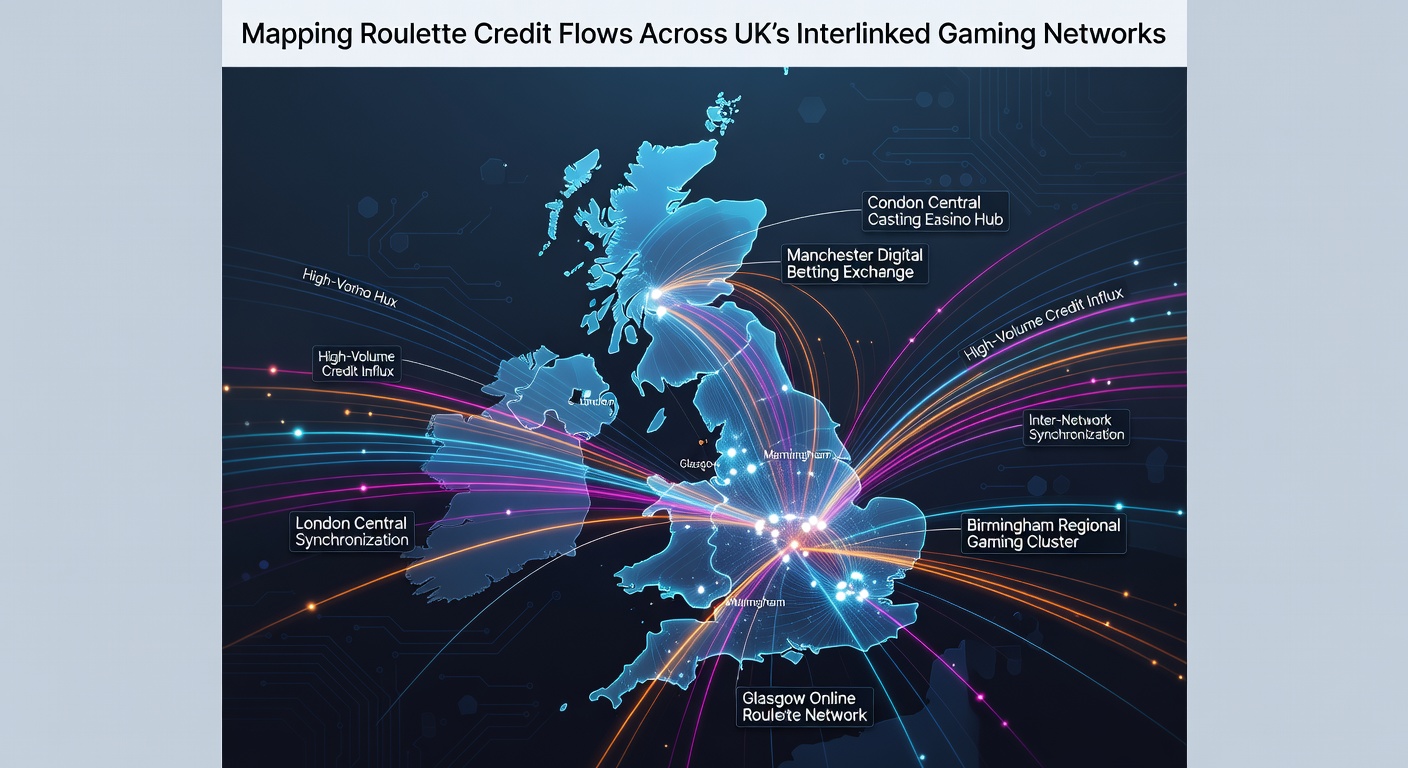
Charting the Pathways of Roulette Credits in UK's Connected Gaming Systems
Analysts tracking digital incentives have started to document how roulette credits circulate among Britain's linked casino platforms, and the resulting maps show clear routes that connect player accounts across sister sites and shared networks. These flows often begin with a single deposit or promotional allocation, then branch out as users move between operators that share backend systems or affiliate structures.
Network Structures Behind Credit Movement
Interlinked gaming operations in the UK rely on shared databases and player identification systems that allow credits earned on one platform to appear in accounts on another. Researchers at institutions such as the University of Nevada, Reno have examined similar multi-site architectures in other jurisdictions, noting that data synchronization occurs in real time when accounts link through common loyalty identifiers. In Britain this produces visible clusters where credits from roulette promotions travel between three or more sites within the same corporate group before being redeemed or expired.
Mapping tools developed by data firms convert transaction logs into network graphs, and these graphs highlight central hubs where high volumes of roulette credits converge. Observers note that smaller affiliate-driven sites frequently feed into larger flagship platforms, creating directional flows that favor operators with broader game libraries. Such patterns become evident when analysts overlay bonus expiry dates against login timestamps across connected domains.
Mechanisms Driving Credit Transfers
Credits move through automated reconciliation processes that match player IDs and track wager requirements across platforms. When a user completes a roulette session on one site, any remaining promotional balance transfers to a linked account once the session ends, provided the network's rules permit it. This transfer mechanism relies on encrypted API calls that update balances within seconds, and the same system logs the origin site for compliance audits.
Industry reports indicate that loyalty point conversions often accelerate these movements, because points accumulated on roulette tables convert into credits usable on partner sites. The process creates closed loops where players who begin on a mobile app may finish their play on a desktop platform operated by the same parent company, with teh credit trail remaining intact throughout.

Analytical Methods Used for Mapping
Data scientists apply graph theory algorithms to transaction records, treating each platform as a node and each credit transfer as a directed edge. The resulting visualizations reveal dense sub-networks where roulette credits circulate repeatedly among a handful of operators. External verification comes from research published by the Australian Institute of Criminology, which has applied comparable methods to multi-operator gambling environments and confirmed that edge density correlates with shared ownership structures.
Software platforms employed by analysts ingest anonymized datasets that include timestamped deposits, bonus activations, and cross-site redemptions. Heat maps generated from these datasets show peak transfer activity during evening hours, when players tend to switch between live dealer and RNG roulette offerings on connected sites. These temporal patterns help refine predictive models that estimate how long credits remain active before redemption.
Developments Observed in May 2026
By May 2026 several mapping projects incorporated machine-learning classifiers that distinguish between organic player movement and automated credit routing. The classifiers flagged accounts exhibiting identical wagering sequences across multiple domains, and operators adjusted their reconciliation rules in response. This adjustment reduced unintended credit duplication while preserving legitimate transfers between sister sites.
Updated regulatory filings from that period also show increased disclosure of network diagrams in operator reports, a step that allowed external researchers to compare credit flow volumes against player retention metrics. The additional transparency produced clearer benchmarks for how long roulette credits typically remain within a given network cluster before leaving through cashout or expiry.
Conclusion
Mapping exercises continue to expose the routes roulette credits follow through Britain's interlinked gaming platforms, and the data generated supports more precise compliance monitoring as well as operational planning. As networks evolve, the same analytical frameworks will track new pathways created by platform mergers or expanded affiliate agreements.