
Mobile platforms continue to drive changes in how no-deposit roulette incentives reach UK players, with device-specific rules often tied to app version requirements that operators enforce through detection systems. Research from the University of Nevada Reno Gaming Innovation Lab shows that software revisions frequently alter eligibility criteria because casinos adjust parameters to match new device capabilities and security features. Operators detect operating systems, screen resolutions, and app build numbers before releasing bonuses, which means players on outdated versions may find themselves excluded even when they meet other criteria. Data indicates that these checks occur during account verification and bonus claim processes, where the system cross-references the current app state against active promotion rules.Platform Detection Mechanics in Practice
Casino systems scan device metadata at login and during promotional events, which allows them to segment offers by hardware type and software currency, according to industry reports from the Canadian Gaming Association. A player who recently updated an iOS app might suddenly qualify for a no-deposit roulette round while an Android user on the same network remains ineligible until their version aligns. Observers note that these distinctions arise because newer builds incorporate updated APIs that support features such as instant spin animations and secure transaction layers that older releases lack.
One case documented by researchers at the University of Sydney revealed that a mid-year app overhaul introduced fingerprint authentication, after which several UK-facing operators immediately restricted no-deposit eligibility to devices running that build or higher. The change occurred because legacy versions could not complete the required verification steps, leaving players to either update or forgo the incentive.
August 2026 Developments and Device Trends
August 2026 brought further refinements when several major platforms pushed mandatory security patches that altered bonus distribution logic. Figures from the Ontario Lottery and Gaming Corporation indicate that similar regulatory environments have seen eligibility windows narrow by up to 18 percent following such updates, as operators recalibrate their systems to exclude any device still running pre-patch software. UK players who delayed installation encountered temporary blocks on no-deposit roulette claims until their apps matched the new baseline.
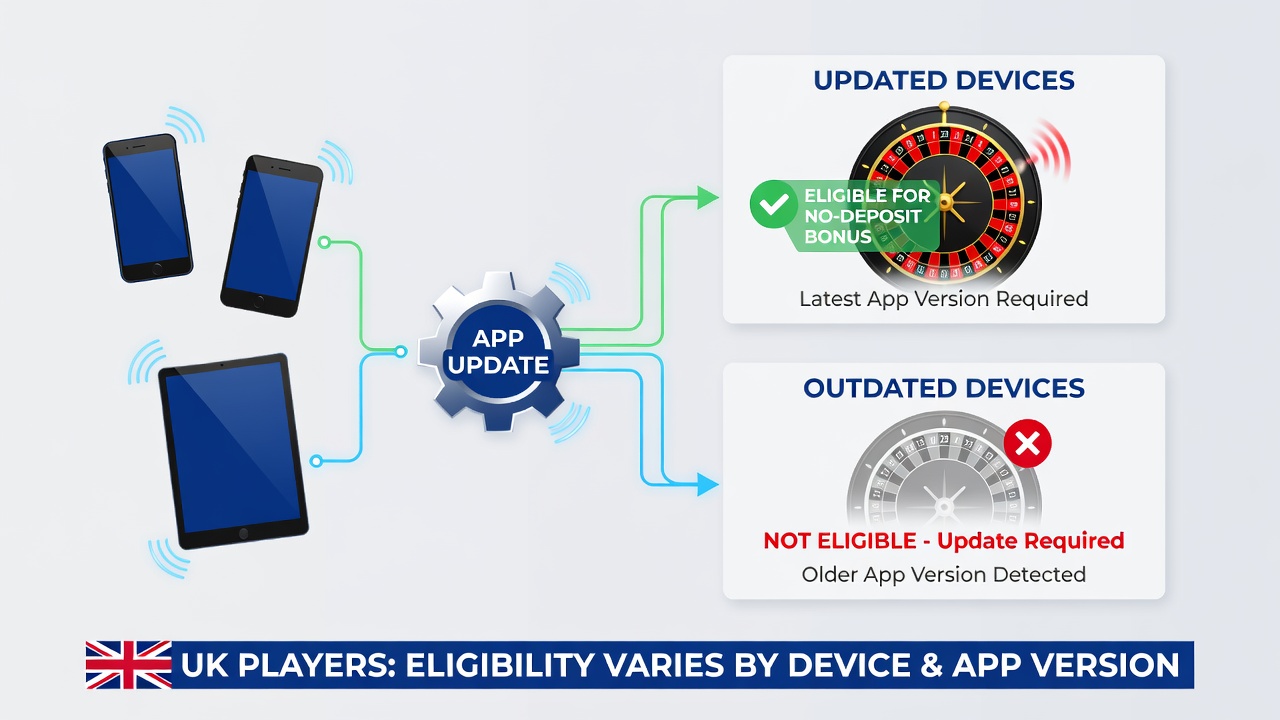
Device manufacturers release these patches at staggered intervals, which creates uneven access across the player base. Android users often receive updates weeks ahead of iOS counterparts or vice versa, depending on the carrier and model. Those who switch between multiple devices discover that eligibility can flip from one handset to another simply because the second device runs a newer build that satisfies the operator's current rule set.
Player Adaptation Strategies Observed
Players who track release notes and install updates promptly maintain consistent access to rotating no-deposit offers, while others experience gaps when they postpone installations. Studies from the University of Nevada Reno indicate that automated update settings reduce these interruptions by keeping devices aligned with operator requirements in real time. Some UK users maintain secondary devices specifically for testing new app versions before committing their primary account, a practice that emerged after earlier update cycles caused widespread eligibility disruptions.
App stores log version adoption rates that operators monitor through their own analytics dashboards, allowing them to time promotional launches for periods when a critical mass of players has upgraded. This coordination minimizes support queries and reduces the number of denied claims that occur due to mismatched software states.
Conclusion
Device-specific rules tied to app updates continue to shape no-deposit roulette eligibility across UK mobile environments, with detection systems enforcing version thresholds that shift alongside each new release cycle. Players who stay current with software revisions encounter fewer barriers, whereas those on legacy builds face temporary exclusions until alignment occurs. Ongoing platform changes ensure these patterns persist as operators refine their technical requirements in response to evolving device capabilities and security standards.