
Synchronizing Roulette Play with Custom Casino Rewards Through Targeted Notifications
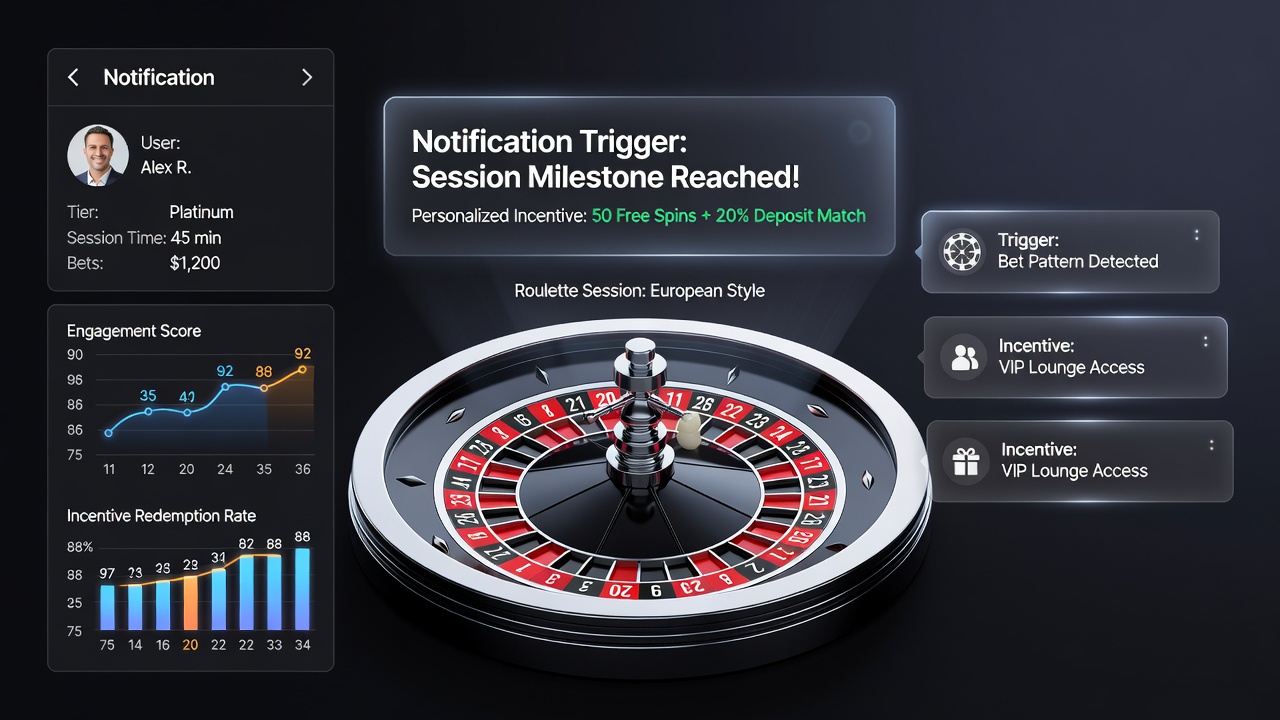
Online casino platforms employ notification systems that detect player activity patterns during roulette sessions and deliver tailored incentives at specific moments, and these mechanisms operate through data analysis combined with timing rules. Operators collect information on spin frequency, bet sizes, and session duration, then match those metrics against predefined reward criteria before sending alerts via push notifications or in-app messages.
Mechanics of Trigger Detection in Roulette Environments
Systems monitor real-time gameplay data such as consecutive losses or wins above certain thresholds, and they activate notifications when those conditions align with available promotional inventories. For instance a player who completes twenty spins on a European roulette table might receive an offer for additional free spins if their account balance falls below a set level, while another user who maintains high average bets could see a deposit match incentive appear after thirty minutes of continuous play. Data from industry reports indicates these triggers reduce the interval between sessions because players respond to time-sensitive messages that reference their recent activity directly.
Algorithms categorize users into segments based on historical behavior, and this segmentation allows platforms to route different incentive types to different groups without manual intervention. Observers note that European roulette variants often feature more frequent low-stakes triggers compared with American versions because the house edge difference influences retention calculations. In August 2026 several platforms updated their notification engines to incorporate device location data alongside gameplay metrics, which enabled offers tied to specific times of day when user engagement historically peaks in particular regions.
Personalization Layers and Incentive Matching
Personalization occurs through machine learning models that cross-reference account age, deposit history, and game preference data with current promotional calendars, and the output determines which incentive appears in each notification. A user who previously responded to cashback offers might receive a roulette-specific reload bonus while someone who accepted free spin bundles could see a tournament entry reward instead. Research conducted by academic groups at institutions including the University of Nevada shows that matched incentives increase session length by measurable percentages when delivered within five minutes of trigger conditions being met.
Platforms integrate these systems with customer relationship management databases so that notification content references exact past bets or wheel outcomes, and this specificity raises open rates according to internal operator metrics shared in industry conferences. What's interesting is how the same trigger can produce different incentives across users because the underlying models prioritize lifetime value calculations over uniform distribution of rewards.
Timing Alignment and Session Continuity
Notification timing follows rules that place messages at natural breakpoints such as after a completed spin sequence or during balance checks, and this placement minimizes disruption while maximizing the chance that players convert the offer into continued play. Data shows that notifications sent during active sessions produce higher conversion than those arriving after logout because the player remains in the decision-making mindset associated with the roulette wheel. Operators adjust these timing windows based on aggregated statistics from millions of sessions, which reveals optimal intervals that vary by player segment and game type.
Cross-platform synchronization allows a notification generated on a desktop session to appear on a linked mobile app minutes later, and this continuity supports players who switch devices mid-session. Regulatory bodies including the New Jersey Division of Gaming Enforcement require operators to log all triggered communications so that incentive delivery remains transparent and auditable.
Regional Regulatory Frameworks and Compliance
Frameworks in multiple jurisdictions mandate clear disclosure of how personal data drives notification content, and operators must obtain explicit consent before activating behavior-based triggers. The Malta Gaming Authority outlines standards for responsible delivery of promotional messages that reference specific gameplay patterns, while Australian state regulators require cooling-off periods between certain incentive types to prevent excessive session extension. These rules shape how notification systems are configured because non-compliance can result in license reviews or operational restrictions.
Industry associations such as the European Gaming and Betting Association publish guidelines that encourage operators to balance personalization with player protection measures, and many platforms now include opt-out toggles directly within the notification interface itself. Figures from Canadian provincial reports indicate that transparent notification practices correlate with sustained player trust across regulated markets.
Conclusion
Notification triggers function as connectors between observed roulette activity and available personalized incentives by processing gameplay data in real time and delivering contextually relevant offers at calculated moments. Systems continue to evolve with added variables such as device context and regional compliance requirements, which refines how operators align session timing with reward distribution across global markets.